
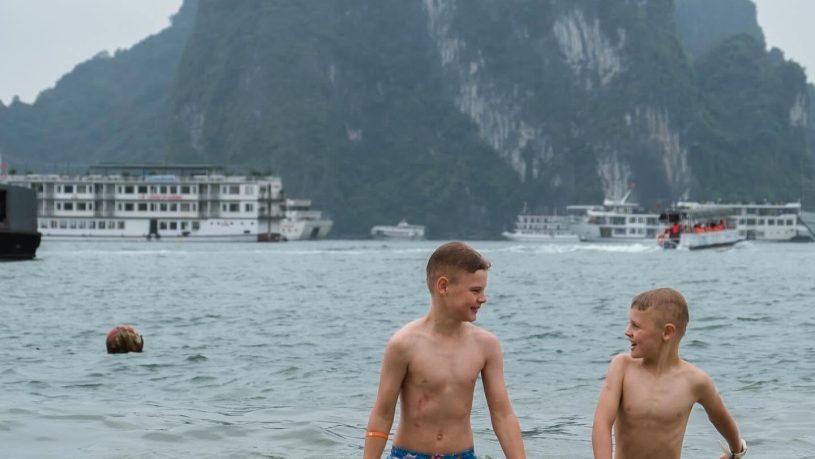
A Halong Bay cruise with kids can bring together experiences that appeal to different generations: watching limestone islands from the deck, exploring caves, trying a cooking demonstration and sleeping aboard a boat. The most enjoyable family trip, however, starts with practical decisions about beds, meals and the daily schedule.
A vessel described as family-friendly may offer spacious accommodation without supervised childcare. A package that allows a child to share a cabin may not include a separate bed. An exciting excursion may also involve steps, a tender transfer or several hours away from your room.
Before booking, match the cruise to your children’s ages, usual routines and interests. This guide explains what to check so that the trip works comfortably for parents and children alike.
1. Choose a Family Cabin by Its Layout, Not Just Its Name
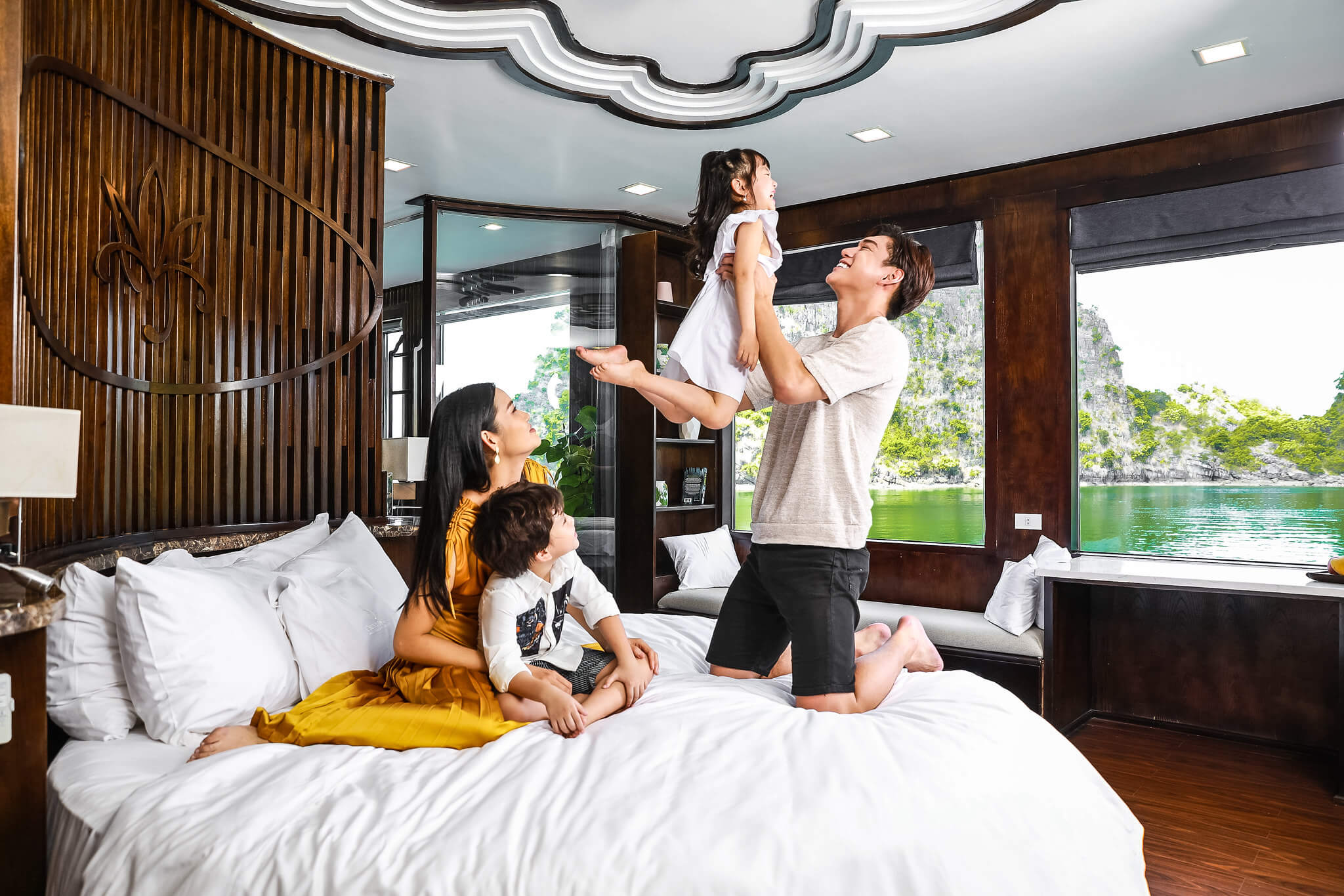
Balance kayaking and sightseeing with quiet cabin breaks, helping children recharge while parents enjoy precious family moments on the bay.
Your cabin is more than a place to sleep. It is where children change after activities, rest between excursions and settle down in the evening.
Start with the family-friendly Halong Bay and Lan Ha Bay cruise selection, then investigate the exact accommodation offered on each vessel.
Terms such as “family suite,” “triple cabin” and “connecting rooms” describe different arrangements. Request the bed configuration and permitted occupancy before comparing prices.
Compare the main accommodation options
| Cabin arrangement | Why it may suit your family | What to confirm |
|---|---|---|
| Double cabin with a child sharing the existing bed | Keeps everyone together without another room | Whether bed sharing is permitted and comfortable for your child |
| Triple cabin or cabin with an extra bed | Gives a third guest a separate sleeping space | Whether the bed is permanent, folding or a sofa bed |
| Family suite | May offer more space for luggage and rest | Actual bed layout, maximum occupancy and bathroom arrangement |
| Connecting cabins | Can provide separate sleeping areas with internal access | That the rooms have a connecting door, rather than being merely adjacent |
| Two separate cabins | May suit families with older children | Adult-occupancy rules, room locations and supervision arrangements |
A larger floor area does not necessarily create a better sleeping arrangement. A couple with two children should not assume that a spacious double suite can accommodate four guests.
For example, the published La Casta Cruise Lan Ha Bay 2 Days 1 Night page distinguishes several suite categories and occupancy arrangements. Ask which option is approved for your particular family rather than selecting solely by room size.
Check practical details inside the cabin
Ask whether there is enough space for the required beds, bags and any cot you have requested. Confirm cot availability and any additional charge before paying.
If you prefer a balcony, ask about the door lock and layout. Parents still need to supervise children around balconies, windows and other elevated areas.
For families with young children, room location can also matter. Ask about proximity to entertainment areas, stairs and the restaurant. A convenient location for one family may be less suitable for another.
Get a complete family quotation
Provide every child’s age at the time of travel and specify the sleeping arrangement you need.
A child discount may depend on sharing an existing bed. A second child, an extra bed or another cabin can change the total.
Request a quotation covering the entire family, including transfers, applicable supplements and any requested equipment. Avoid calculating the price from an adult starting rate alone.
2. Arrange Children’s Meals Before Departure
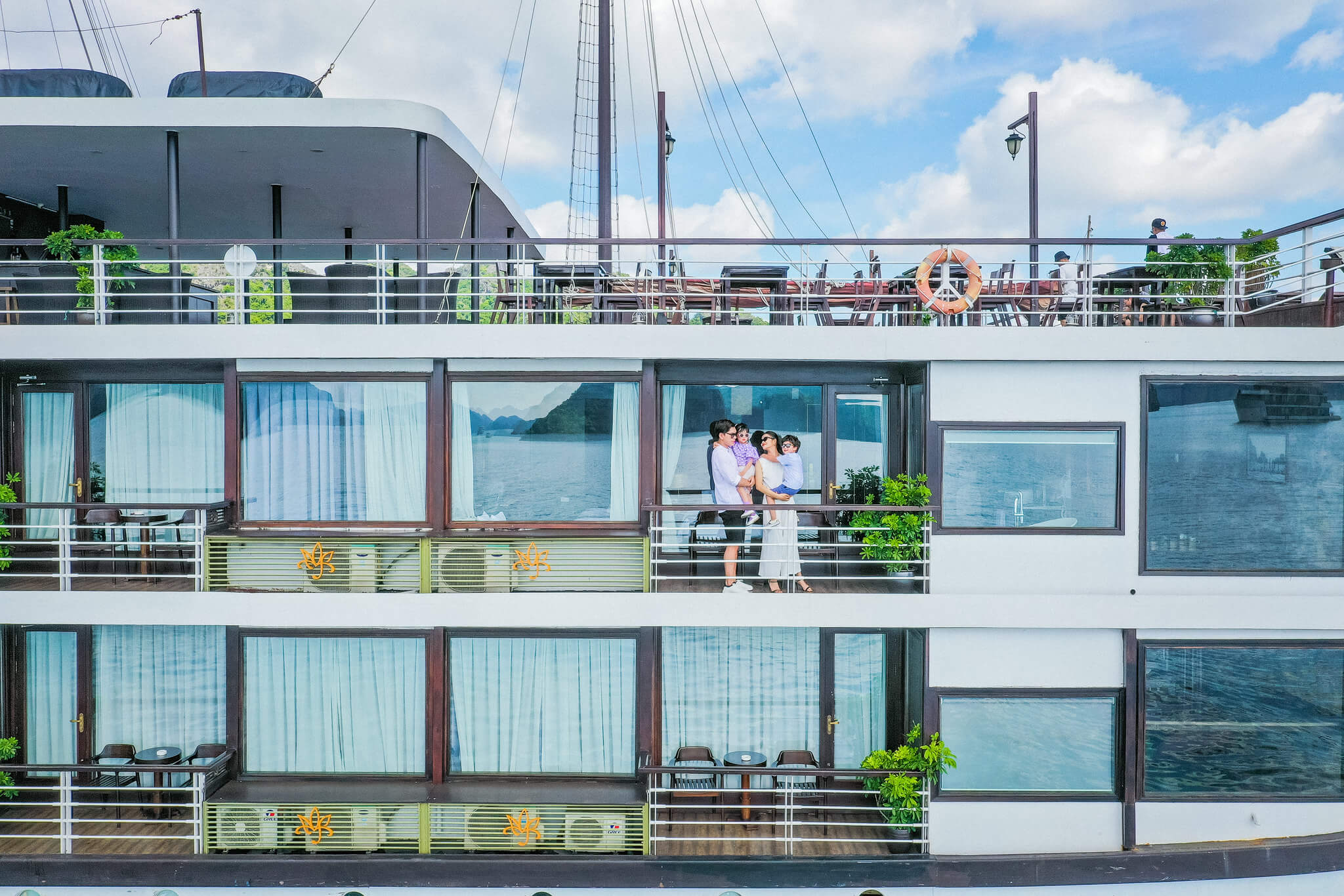
Make mealtimes easier by arranging children’s portions, familiar dishes, and dietary requirements before your family boards its Halong Bay cruise.
Mealtimes are easier when the kitchen understands your family’s needs before the cruise begins.
Ask which meals are buffet-style, which use a set menu and when they are served. A buffet may offer more choice, but it does not guarantee that a particular food will be available.
Ask specific questions about food
Rather than requesting “child-friendly meals,” describe what your child can eat and any important restrictions.
Useful questions include:
- Can the kitchen prepare a simple, less-spicy alternative?
- Are children’s portions available?
- Can sauces be served separately?
- Is an earlier meal possible?
- Are highchairs available?
- Can suitable snacks be brought aboard?
- What arrangements are available for baby food?
These are requests to confirm, not services to assume.
Some operators publish advance-request options. Bhaya, for example, states that children’s menus and baby food can be arranged with advance notice, asks for dietary information at least a week before departure and notes that infant formula is not supplied. This is an operator-specific example rather than a promise for every cruise.
Communicate allergies clearly
If a child has a food allergy, explain the ingredients involved and ask whether the kitchen can meet the required precautions, including concerns about cross-contact.
Obtain a clear response before booking. A general statement that dietary requests are accepted is not the same as confirmation that a particular requirement can be accommodated.
Follow your child’s established care plan and keep necessary supplies accessible throughout transfers and excursions.
Prepare for gaps between meals
Halong Bay Cruise schedules may not match your usual eating routine. Bring an appropriate quantity of familiar snacks if the operator permits them, especially for the road journey and embarkation period.
For babies, confirm arrangements for preparing and storing feeds rather than assuming cabin equipment is suitable. Bring the supplies your child normally requires.
Check whether bottled water and drinks are included. A meal package does not automatically include every beverage ordered during the trip.
3. Match Daily Activities to Your Children’s Interests and Abilities
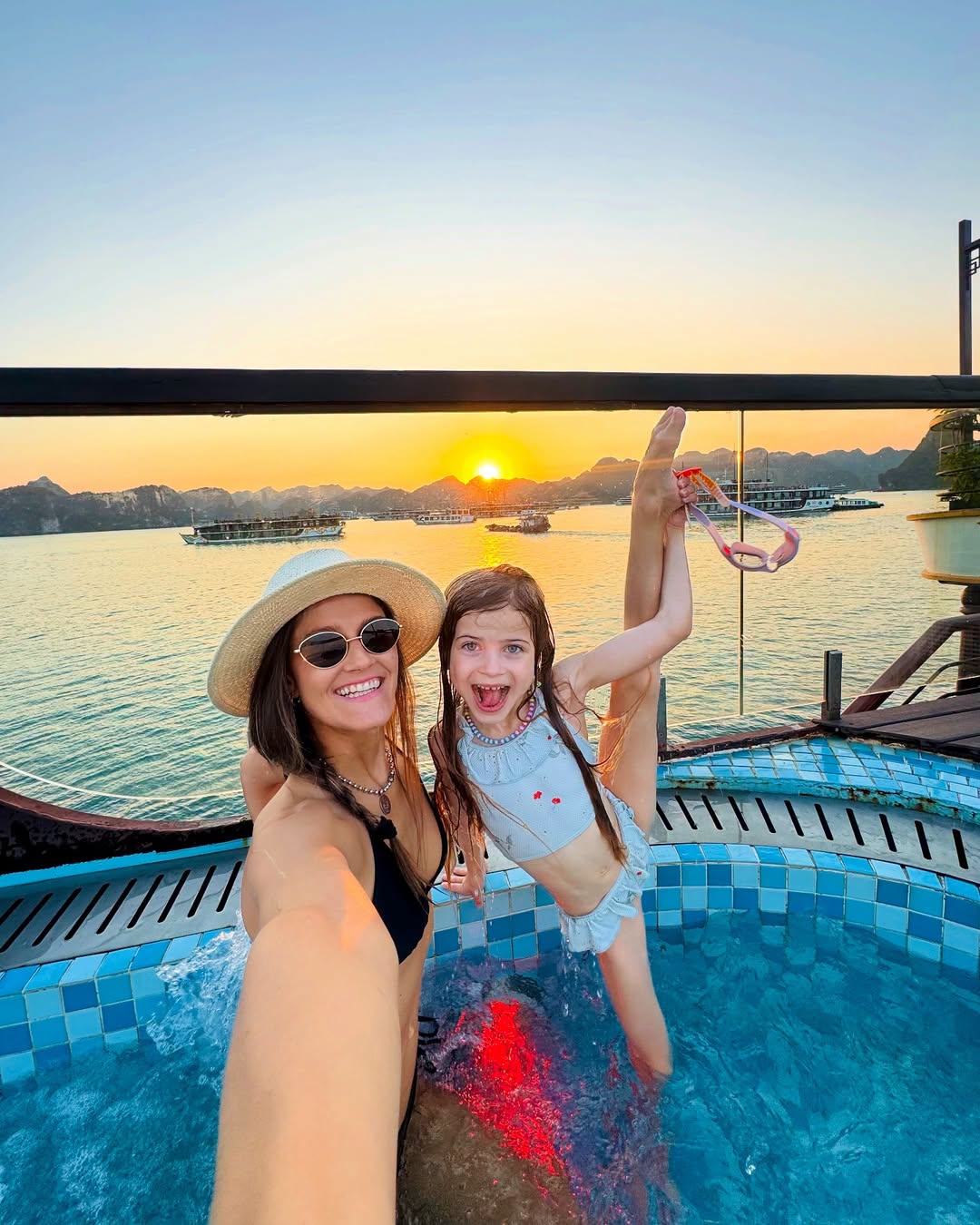
Discover Halong Bay with your children, enjoying scenic cruising, family cabins, shared meals, and memorable adventures among spectacular limestone islands.
A Halong Bay cruise with kids works best when activities are treated as choices rather than a checklist that everyone must complete.
Read the detailed itinerary and ask about the physical demands of each excursion. The name of an attraction does not explain its steps, walking distance or boarding arrangements.
The published Athena Luxury Cruise Halong Bay 2 Days 1 Night itinerary illustrates a program combining cave and island visits with water-based activities. Confirm the current schedule and suitable alternatives for your sailing.
Cave visits and island walks
A cave excursion can interest children who enjoy unusual rock formations and exploring on foot. However, steps, uneven surfaces and walking in a group may be challenging for some families.
Ask about the route before deciding whether it suits your child. A carrier may be more practical than a stroller on certain excursions, but check access and your own ability to manage the route.
For island viewpoints, establish whether the climb is optional and whether there is a suitable alternative while other passengers continue.
Kayaking and rowing boats
Kayaking can be appealing to older children, but suitability depends on the operator’s rules, equipment, conditions and the child’s abilities.
Confirm:
- Any age, size or participation restrictions.
- Whether an adult must share the kayak.
- Available child-sized safety equipment.
- Expected time on the water.
- What happens if a child does not want to participate.
- Whether a guided rowing-boat alternative is offered.
A rowing boat can reduce the need to paddle, but it remains a water excursion with its own boarding and supervision requirements.
Cooking demonstrations and evening activities
A cooking demonstration can provide a short shared activity, particularly if children are allowed to participate in an appropriate way. Ask what is involved and follow staff instructions.
Evening options such as squid fishing may appeal to some children, while others will prefer an early bedtime. Participation should be supervised, and you should not plan the evening around guaranteed wildlife sightings or a successful catch.
Bring a few quiet activities for downtime: books, drawing materials or downloaded entertainment. You do not need to fill every gap with an organized event.
Deck time and water safety
Supervise children on decks, near stairs and during transfers between vessels. Ask the crew to explain the relevant safety procedures and identify suitable life jackets before excursions.
Bhaya states that it offers children’s and infant-sized life vests. Availability and fit still need to be checked with your own operator for each child.
Do not treat a swimming pool, kids’ area or family cabin as evidence that supervision is provided.
4. Build Rest into the Daily Schedule
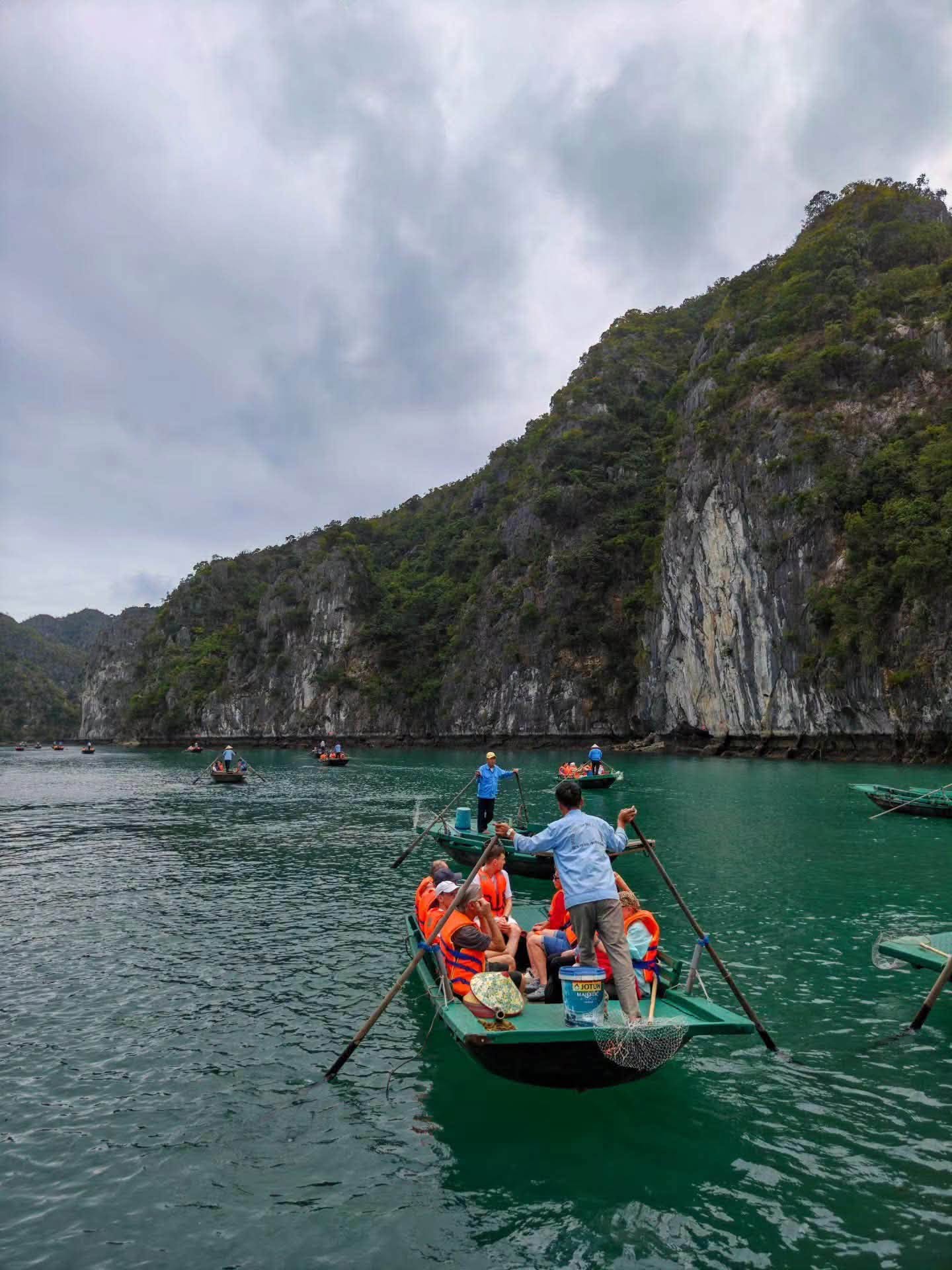
Explore caves and island scenery together, choosing excursions that match your children’s ages, interests, energy levels, and comfort with walking.
Cruises often include early starts and several transitions: cabin to restaurant, vessel to tender, tender to attraction and back again.
A child who enjoys each activity individually may still become tired from the full sequence.
An illustrative family day
The following is a planning example, not a fixed schedule for every vessel.
| Part of the day | Typical planning consideration | Family approach |
|---|---|---|
| Morning transfer | Breakfast and time in a vehicle | Keep snacks and essentials within reach |
| Reception and boarding | Registration and possible tender transfer | Avoid packing documents beneath other luggage |
| Lunch | First meal aboard | Confirm simple options before arrival |
| Afternoon excursion | Walking or water activity | Choose according to energy and interest |
| Return to the cabin | Changing and preparing for dinner | Protect a short period of downtime |
| Dinner | Meal timing may be later than usual | Ask about an earlier option if needed |
| Evening | Entertainment and optional activities | Keep bedtime flexible but realistic |
Ask what happens if you skip an excursion
Confirm whether one parent can remain aboard with a resting child, whether another adult can join the outing and what services remain available on the vessel.
Do not assume that a child can be left with staff while parents participate elsewhere.
If childcare is important, request explicit information about availability, charges, qualifications and booking conditions. A cruise’s general “family-friendly” description does not establish a childcare service.
Watch the final morning
Cabin checkout may happen before final disembarkation. Pack most belongings the night before and keep a small bag ready with clothes, snacks, documents and personal essentials.
Ask when the cabin must be vacated and where your family can wait afterward. This helps you plan around naps and avoid searching through bags during the return journey.
5. Choose One Night or Two Nights Carefully
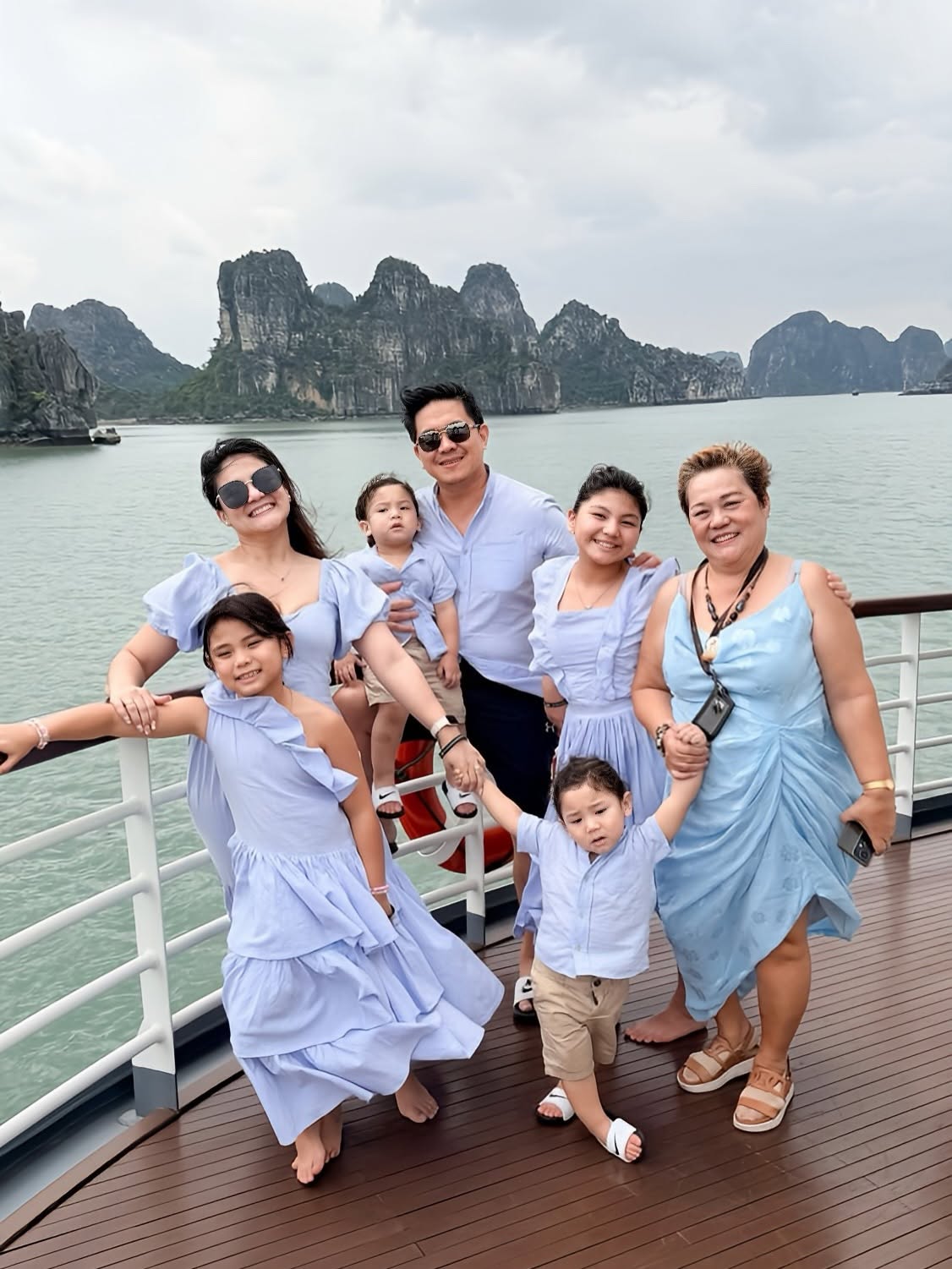
Plan your family cruise with confirmed transfers, suitable life jackets, flexible activities, and thoughtful packing for a smoother journey together.
Duration should reflect your family’s routine as well as your sightseeing ambitions.
When one night makes sense
A two-day, one-night cruise can suit families trying an overnight boat trip for the first time or traveling within a busy Vietnam itinerary.
It limits the time committed to the cruise and can still provide an evening aboard and a morning on the bay.
The trade-off is a compact schedule. You may check in, join an excursion, have dinner and begin preparing for departure relatively soon afterward.
When two nights may work better
Two nights provide another evening and a middle day without final checkout. That can make the overall stay feel less brief.
However, investigate the middle-day arrangement. The published La Casta Cruise Lan Ha Bay 3 Days 2 Nights program describes a separate day-boat excursion.
For a family, the important questions are whether the excursion boat has suitable seating, shelter, toilets and rest opportunities, and how long you will be away from the cabin.
A longer cruise is not automatically a slower cruise. Choose it when the additional day suits your children.
Pack for the transitions
Keep the family’s essentials in a small accessible bag:
- Identification and booking details.
- Necessary medication and personal care supplies.
- A change of clothes for each child.
- Warm or weather-protective layers.
- Suitable shoes.
- Approved snacks and feeding supplies.
- A wet-clothes bag.
- A small selection of quiet entertainment.
For children who need specialized supplies, confirm arrangements before departure and bring what you cannot reasonably expect the vessel to provide.
Also ask about luggage and stroller storage. Compact equipment may be easier to manage, but suitability depends on the vessel and transfer arrangements.
6. Quick Recap
The right Halong Bay cruise with kids begins with three practical checks: a cabin that fits your sleeping arrangements, meals the kitchen has confirmed and activities that suit your children’s abilities.
Build rest into the schedule, clarify supervision responsibilities and check child-sized equipment before water excursions. For a two-night sailing, investigate the day boat as carefully as the main vessel.
Before paying, request a written family quotation covering the cabin, children’s ages, meals, transfers, supplements and important requests. Keep the itinerary flexible enough to enjoy the trip without joining every activity.
To find a suitable option, contact Lan Ha Bay Cruises with your travel dates, children’s ages, preferred sleeping arrangement and any dietary requirements. Ask for a family cabin and daily program that work together for your group.

I love traveling and have been working in tourism industry since 1996. Vietnam is my homeland so I would like to share with you my experience to discover this destination best!